There was a time when good hair days felt more like pot luck than anything. Now it’s a numbers game. The curl-classification system ranges from soft, surfer-babe waves known as 2A, to tightly wound rock-star coils at the 4C end. But what does it all mean and why do we need it? Decoding your curl type is the key to unlocking more good hair days, as you become familiar with your specific hair texture, what care it needs to thrive, and what it will and won’t do when styling.
So, where to start? Here we’ll guide you through the different curly hair type categories, how to recognise them, and how to show them off at their natural best with the right care and products.
What Are the Different Curly Hair Types?
There are three curly hair types, classified as 2, 3 and 4. The higher the number, the tighter the curl pattern. Put simply: type 2 is wavy, type 3 is curly, and type 4 is coily. And if you’re wondering, type 1 is straight. Then there are the sub-categories A, B and C based on the width of your waves, curls or coils. Given the multitude of curly hair products, videos and chat forums, it’s worth pinning down your hair type before shelling out for the latest viral product or being disappointed by the ‘this works every time!’ technique.

How to Work Out Your Curl Type at Home
Obviously you can just look in the mirror and size up your strands, but a closer look may reveal your subcategory (that’s the A, B, Cs) for a more accurate picture. You can always ask your hairdresser for their professional opinion, but there’s also a quick and easy strand test you can do at home.
After you’ve washed your hair, and before you apply any styling products, remove a few strands of hair while it’s wet. Lay them on a flat surface where you can clearly see each individual strand, and watch what happens to them as they dry.
If a strand dries into a loose S-pattern shape, you likely fit into the wavy hair type category. A tighter curl that looks more defined or like a corkscrew, is classified as the curly type. And if your hair strand forms a small zig-zag pattern or a really tight corkscrew, you’re in the coily category. Now let’s dig deeper into the science behind those spirals, and move you closer to a hair routine that actually delivers the curls of your dreams.
Type 2: Wavy Hair (2A, 2B, 2C)
Type 2 wavy hair is the most versatile - one day it can be straight(ish), and another day it can border on curly. On the downside, it has a tendency to be oily nearer the roots where it’s straighter.
Type 2A hair has subtle waves, starting lower down the hair shaft towards the ends, with a tousled texture. This is what people often refer to as ‘beachy waves’.
Type 2B’s are fuller, loose waves, with the S-shaped bend starting from mid-length, and looking flatter at the roots. The struggle for type 2B hair is usually frizz and maintaining those gorgeous curves, as they tend to go limp on day 2 or 3.
Type 2C hair is the most wavy on the scale, with some strands even forming loose spirals. The S-shaped bends begin at the root, and the hair is often thicker and also prone to frizz.
Type 3: Curly Hair (3A, 3B, 3C)
Type 3 hair is all the curls, from loose buoyant loops, to shiny springy corkscrews. All those juicy curls require more work than wavy hair though, as strands struggle to maintain hydration because your natural scalp oil can’t follow the twists and turns of the hair shaft. The opposite of pin-straight hair where oils pass easily down the hair shaft. Good for hydration, bad for greasy looking locks.
Type 3A curls are large, loose, shiny and generally easy to manage with the right products. Look for a curling mousse or a nourishing curl cream, that also bring hydration to the party.
Type 3B are more like springy ringlets. Volume is your friend here, but the combination of textures can make it tricky to tame those curls and keep 3B hair hydrated. Curl gels with moisturise boosting ingredients built-in are great for definition without the frizz.
Type 3C curls are the tightest in this category, looking like narrow corkscrews the width of a pencil. They come with lots of luscious, natural volume, but is also susceptible to frizz. Go for sulphate-free shampoos that cleanse without drying, or try a co-wash to give thirsty curls much-needed hydration.
Type 4: Coily Hair (4A, 4B, 4C)
Type 4 hair is coily, Afro-textured or kinky hair. It’s formed of soft, very small corkscrew curls or a Z-shaped hair pattern that starts right at the root. The strands are fragile, and live their best life with deep conditioning and gentle handling.
Type 4A hair has a springy, tight coil pattern, narrower than a pencil, that maintains its S-shape even when stretched out. This characteristic is different to types B and C. Curl cream and leave-in moisturiser are a must for your bathroom cabinet.
Type 4B curls or coils form tight Z-shaped bends with sharp kinks, giving it softer definition than 4A. This hair type experiences shrinkage (it looks shorter than it actually is) by up to 50%. With the right products and technique, you can stretch out your coils and create clumps for better definition and elongation.
Type 4C hair is similar, but the zig-zag patterns are even tighter, giving it minimal definition when dry, but big, beautiful volume. Shrinkage is up to 75%, and because dryness is one of the main concerns, hair masks, leave-in conditioner and sleeping in a satin bonnet or on a satin pillowcase are high on the coily-care list.
Can You Have More Than One Curl Type?
That might seem like an exhaustive list, but some charts now have 8 categories. However, no matter how many categories there are, curly hair does not like to be type cast. You could identify your hair as a solid 2B, but still have a few ringlets hiding underneath, or straighter 2A pieces framing the side of your face. Having a mix of curl patterns and textures is the norm. That said, there is usually an over-riding curl type that gives you a clue as to what your hair needs, and will help manage your expectations over what it will and won’t do when creating your style.

Why Your Curl Type (and Porosity) Affects Your Routine
Just when you think you’ve got it licked, there are other things influencing your curly hair that the number chart doesn’t cover. The porosity of your hair directly affects the hydration of your strands, and that influences shine, condition, behaviour and styling. Thankfully, there are only 3 types of porosity (for now!) - high, medium or low.
High porosity: moisture easily enters the hair (hello humidity), and it also leaves your hair easily. Dryness and frizz are the most common struggles.
Medium porosity: the hair cuticles are less open than high porosity hair, allowing moisture to enter easily, but then hang on to it better.
Low porosity: because the hair cuticles are tightly closed, low porosity hair is great at retaining moisture and keeping it in the hair shaft.
To find out your hair porosity, you can try the ‘float test’ at home. It’s not scientific, but it’ll give you an idea. Simply drop a single strand of dry hair, with no styling products on it, into a glass of room temperature water and wait 2-4 minutes. If it stays on the surface, you’re low porosity. If it sinks to the bottom, you’re high porosity. And if it suspends itself somewhere in the middle of the glass, then it’s medium porosity.
Caring for Curls the Faith In Nature Way
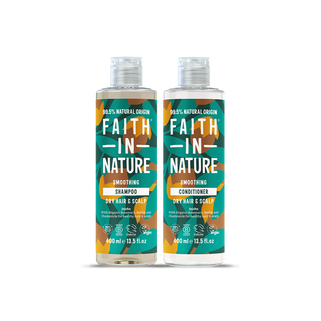
Natural hair care routines are popular among the curly community because it avoids harsh synthetic ingredients that could strip moisture and create product build up. A big no-no for healthy waves and curls. Wavy types might love our gentle, nourishing Jojoba Shampoo and Jojoba Conditioner, made with organic jojoba seed oil and without parabens, SLS or silicones that might weigh you down.
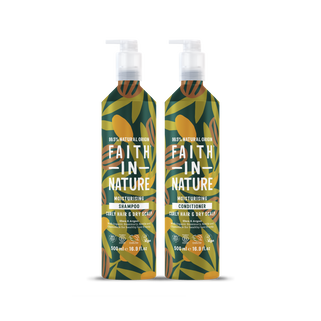
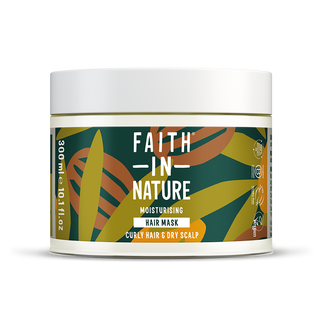
For the curlier curls, our Shea & Argan range has been specially made for curly, coily and afro hair, with organic shea butter and organic argan oil delivering that all important moisture boost. It includes a deliciously nourishing Shea & Argan Hair Mask for some intense TLC once a month, or once a week depending on your hair type.

Simple Tips for Healthier Curls, Whatever Your Type
If you’re feeling overwhelmed by the sheer volume and variety of information on curly hair, here are a few golden rules to get you started:
How often should you wash your hair?
Wavy hair: every 2-3 days to maintain the balance between an oily-prone scalp, and to avoid product build-up leaving waves heavy and limp.
Curly hair: 2-3 times a week should be enough, to avoid drying out your tresses.
Coily hair: once or twice a week is usually enough as it’s the driest hair type, and it helps to avoid damage from over-handling.
Protect your hair while you sleep: Yes, that innocent cotton pillow case can suck precious moisture from your hair and create friction (aka damage) while you’re busy dreaming of curl nirvana. A satin pillowcase or bonnet, is a no-brainer for curly types.
Avoid high heat styling: turn down the heat on your hair dryer to low or medium while diffusing your waves or curls. High temperatures will cause heat damage undo all that good work from leave-in conditioners.
Detangle when wet: use a wide-tooth comb or your fingers to gently detangle when your hair is soaking wet and slathered in conditioner, as it’s less likely to cause breakage or snapping.
Switch up your towel: traditional towelling is rough on your hair shaft, so swap it for a gentle microfiber towel or a favourite old t-shirt.