Key Takeaways:
How fast your hair grows depends on a few things, including age, genetics and even our environment, but ultimately your natural rate of hair growth is unique to you. Whether you’re looking for extra length or just pondering the question, understanding how hair grows can help us care for it more kindly and help set some expectations of what is natural.
Hair growth phases
We know talking about follicles and the stages of hair growth can get a bit technical, but bear with us, it's worth taking the time to understand it. And remember, these cycles differ from person to person and are all completely natural.
Anagen phase
This is the first phase of your hair’s active growth cycle and is when your strands are at their most active. This is also when new hair takes root at the follicle and starts to emerge over time. Typically, this can last for around two to seven years, depending on genetics and other factors.
Normal growth rate tends to be around half an inch per month – this can vary depending on your age. The older we get, the smaller our hair follicles become, meaning our hair gets finer and thinner. Hormonal shifts, such as declining oestrogen during menopause, can also shorten the hair’s growth phase and increase shedding during this time. Levels of keratin (the protein for healthy hair and nails) also have an effect.
Catagen phase
This is a transition phase during which your natural hair growth tends to stop, and your hair detaches from the blood supply in the follicle. This then becomes what’s known as a club hair (a hair strand that’s stopped growing). At any given time, about 1-3% of your hair is in the catagen phase.
This stage is relatively short (only about 2-3 weeks), and after this, the hair is released, and the hair follicles get some much-needed rest for around three months during the Telogen phase…
Telogen phase
During the third stage in the cycle, the strands are still in the follicle but are not attached to the blood flow. For around three months, the hair follicles are in the resting phase, and there is no growth. After this, the hair shaft (the visible bit) falls out, and the cycle begins again at the Anagen phase (this final stage of the hair falling out is sometimes also called the Exogen phase, not to be confused with hair loss).
The hair growth cycle may seem slightly long and drawn out, but multiply that by all the hairs on your head, and it’s a never-ending process. Typically, we lose around 50-100 hairs per day. Rest assured, there’s always a new follicle waiting in the wings.
What can affect average hair growth rates?
Everything from genetics to your age and general scalp health can affect how fast your follicles produce hair and hair shedding rates. But it's important to remember that everyone is different, and although some factors are based on genes or certain medical conditions, others are environmental and can be more easily managed in a natural, non-harmful and non-surgical way to improve hair thickness. There are also studies out there that suggest your hair growth may even be influenced by ethnic and geographical origin.
Diet
Naturally healthy hair starts with a balanced diet that’s rich in protein, iron, biotin and Vitamin D. Supplements can help, but these can also be naturally found in foods like tofu, lentils, nuts and seeds, and so many more.
Hormones
Hormones also have an undeniable effect on hair . As we age, our metabolisms slow, and the hair growth cycle slows along with it. Our hair tends to spend longer in the catagen phase, and new growth starts to slow. Trust us: this is normal.
Natural changes
Other life stages and events, like pregnancy, menopause, and thyroid issues, can all have unwanted effects on our hair; strands can become finer or even thicker, and we tend to get more brittle hair over time. Your scalp dermatology can also have an effect. Certain medical conditions can lead to hair loss, such as autoimmune diseases and cancer treatments, which can affect hair health in general and lead to things like alopecia areata, male pattern baldness and telogen effluvium (hair loss). It’s probably handy to remember that this is all completely natural - there’s little we can do to stop these effects, so it’s better to embrace what Nature gave you.

Haircare for optimal growth
One thing that is in our control: haircare. Unlike genetics, we can make small changes to our haircare routine to give our strands a little helping hand, regardless of the speed of hair growth.
Over-styling and heat styling from tools can really hinder a healthy-looking head of hair. It makes it easier for strands to become dry, leading to more breakage. Remember: Every time you shampoo, you should reach for a moisture-rich, natural origin formula like rosemary or coconut to help promote a healthy outer lipid layer. This will help add some much-needed hydration to strands in the anagen phase, because luscious, nourished hair begins with a healthy, balanced scalp. And for even more hydration, try incorporating a weekly hair mask into your routine, your scalp will thank you for it (especially if you have curly hair or long hair).
How to make hair grow faster
Sometimes, trying to grow our hair the natural way can feel like a losing battle. You might be left wondering, What can I do to make my hair grow faster? The short answer is that no one thing will speed up hair growth (bear with us, it does get better). But by sticking to a balanced diet and always maintaining good healthcare, you’ll be giving your hair its best shot at a healthy growth cycle.
Regular haircuts and switching up hairstyles are great ways to make sure your hair remains healthy and looking its best. It can help prevent split ends and make your hair appear longer. Another great option is to have as many scalp massages as possible (what a treat for your tresses!) to stimulate circulation. These little things can go a long way in helping your hair grow at its optimal rate.
Including some staple hair products into your routine can help add some much-needed moisture into your strands and keep your scalp healthy to maximise regrowth.
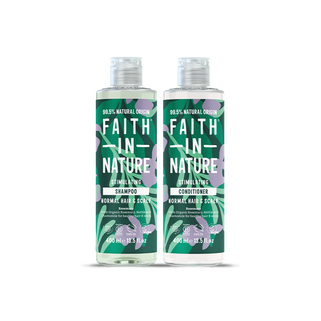
Avoiding harsh ingredients is also a must if you’re looking for a healthy scalp. Natural origin formulas that are free from parabens are a great starting point and are ideal for a balanced wellness routine. The Rosemary Shampoo & Conditioner Set is made with 99.5% natural origin ingredients, so you can avoid anything unwanted ending up stunting hair growth. Plus, with our Rosemary Conditioner 5L refill, a moisture boost is always on hand when you need it most (and it’s better for the planet, too. Win-win).
Consistency is key
Although half an inch of growth per month is average, there are so many things that can affect healthy hair growth. Some are within our control, like sticking to a good haircare routine and maximising natural, stimulating ingredients like rosemary for most hair types. Others, like genetics, age and hormones, are impossible to avoid.
The answer for how to make your hair grow faster is not so clear-cut. Sticking with a consistent routine and using natural origin ingredients may give your hair its best chance of healthy growth. Beyond that, embracing the strands Nature gave you is always the best way, in our opinion.
Enjoyed this? You might like: